
Listen to this page
Press play to listen.
The recording could not be played. Please try again later.
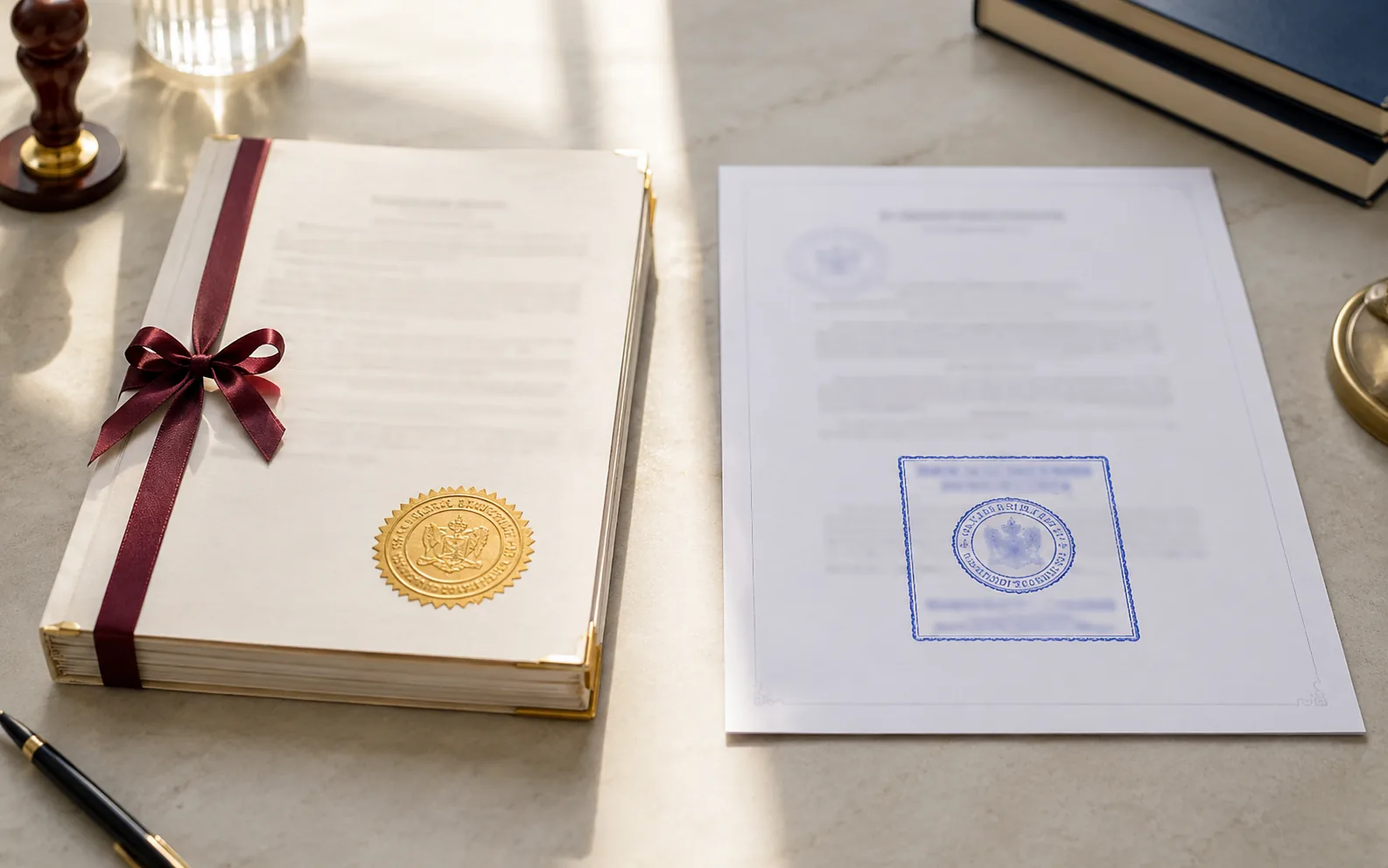
Two certifications, two different questions
Notarisation and an apostille answer two different questions about a document. Notarisation answers "Was this translation prepared by a translator with a registered oath?", while an apostille answers "Are the signature and seal on this document authentic and valid abroad?"
One therefore does not replace the other. Notarisation gives the document official standing within Türkiye; an apostille extends that standing to other countries party to the Hague Convention.
How does the order work?
A common sequence for a translation file intended for use abroad is as follows:
- The document is issued, for example by a civil registry office
- A sworn translator prepares the translation and the notary certifies it
- Since the notarial act is treated as an administrative document, the apostille is obtained from a governor's office or district governor's office
Some countries require the apostille on the original document rather than on the translation; the document is then apostilled first and the document and endorsement are translated together. The institution requesting the document determines the required order.
When only one is sufficient
- An apostille is unnecessary if the document will be used within Türkiye; a sworn translator's stamp or notarisation is sufficient according to the institution's requirements.
- An apostille has no effect if the document is destined for a country that is not party to the Hague Convention; the consular legalisation chain applies.
- Some countries and institutions accept multilingual international forms (Forms A/B/C) without either translation or apostille.
Difference in fees
Notarisation is subject to the notarial fee schedule and the notary collects the fee. Apostilles are issued without a fee at governors' offices and district governors' offices; an e-Apostille obtained through PTT via e-Devlet carries a service charge per document.
This distinction matters when assessing quotations: you should ask what an amount described as an "apostille fee" pays for.
Frequently asked questions
Does an apostilled document also require notarisation?
The usual order is the reverse: notarisation is completed first and the apostille is obtained on it. An apostille on the original document does not remove the need to notarise the translation; if the institution separately requires certification of the translation, both are prepared.
Who determines which certification is needed?
The institution requesting the document. If you send us its document checklist, we can clarify the correct combination together.
This content is for information purposes. The documents and procedures required by institutions may change; we recommend confirming the requirements with the relevant institution before applying.