Listen to this page
Press play to listen.
The recording could not be played. Please try again later.
Three stages, three different files
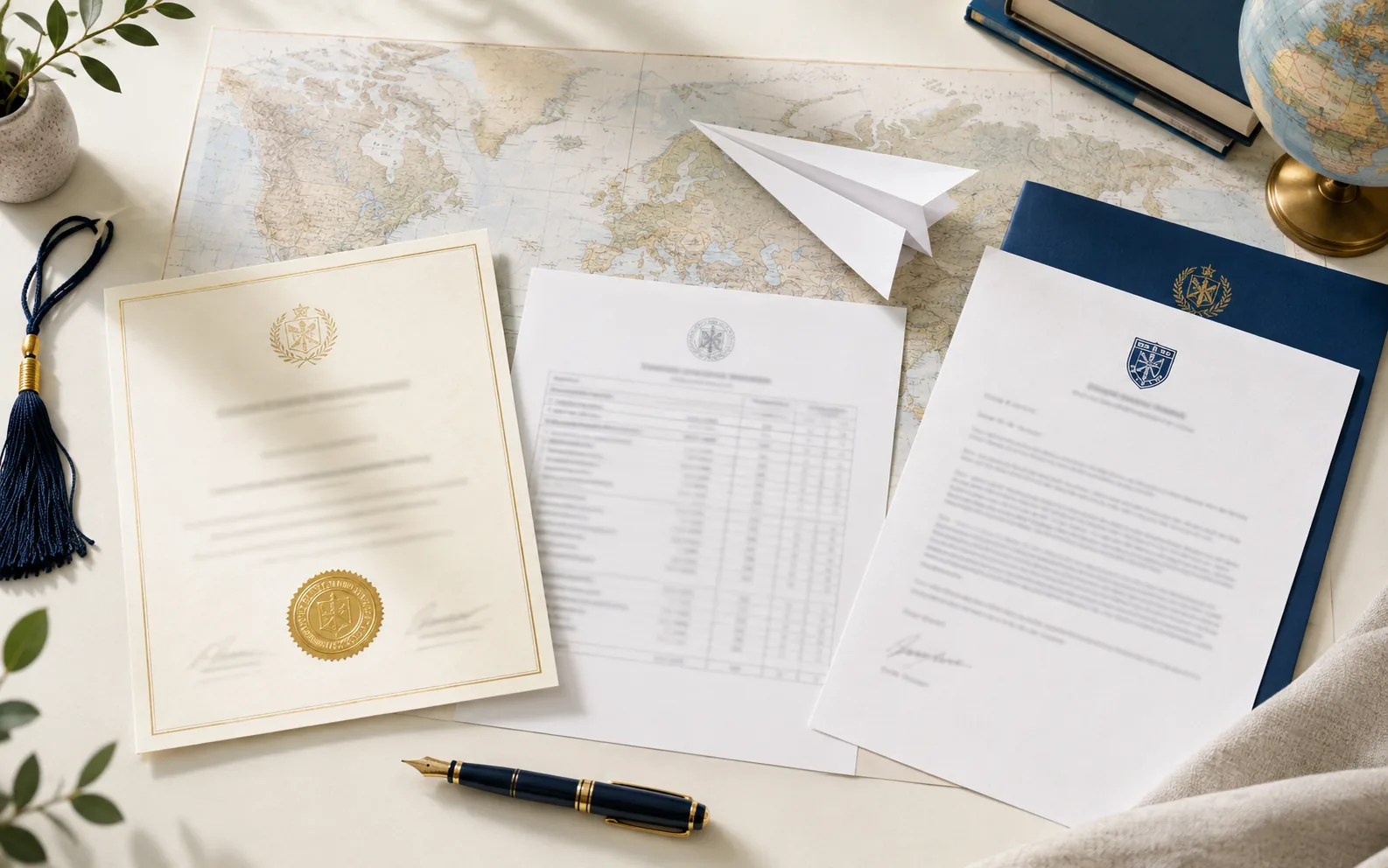
Studying abroad involves not one application but three successive files: university application, enrolment following acceptance, and visa application. Each stage has its own document list, and translation needs vary.
The most common mistake is having all documents translated at the outset; some are required only after acceptance, and documents translated too early may become outdated.
Application stage
- Secondary school or undergraduate diploma — into the language required by the university
- Transcript — together with an explanation of the grading scale
- Language certificate — no translation is required because it is already in the foreign language
- Statement of purpose and reference letters
- In some countries, a qualification assessment statement from an organisation such as Anabin/ZAB, UK ENIC, or Nuffic
Which documents assessment bodies accept and from whom varies by country; we explain these systems individually in our country guides.
After acceptance and at the visa stage
- Acceptance letter — into Turkish for procedures in Türkiye
- Evidence of financial means: bank statement and sponsor's undertaking
- Population registry extract and birth certificate — for enrolment in certain countries
- Medical report and vaccination records — depending on the country
- Parental consent document for students under 18
Most visa-stage documents must be current; check the date ranges required by consulates and schedule translation accordingly.
How is the type of certification chosen?
Most universities consider a certified translation bearing a translator's declaration sufficient; notarisation typically arises with qualification recognition authorities and consulates.
The same file may require two types of certification: a copy bearing a sworn translator's stamp for the university and a notarised copy for the visa. Planning copies at the outset prevents paying for translation twice.
Frequently asked questions
Should I apply with my secondary school diploma or undergraduate diploma?
It depends on the programme: undergraduate programmes require secondary school documents, while postgraduate programmes require university documents. Mixing the two up is one of the most common issues requiring correction.
Will English translations work in every country?
Many universities accept English, but qualification recognition authorities and official institutions usually require their own language. You need to check the language requirement on the application page.
This content is for information purposes. The documents and procedures required by institutions may change; we recommend confirming the requirements with the relevant institution before applying.